If you’ve ever Googled “how to get free backlinks,” you’ve probably run into a wall of paid link-building services promising fast results for a few hundred dollars a link. Here’s the truth: some of the most powerful backlinks you’ll ever earn won’t cost you anything but time and a little strategy.
High authority backlinks — links from trusted, well-established websites — are one of the strongest signals search engines use to decide how much to trust your site. For a small business competing against bigger players with bigger budgets, free backlinks aren’t just a nice-to-have. They’re often the only realistic path to ranking higher without burning through your marketing spend.
This guide walks through proven, white-hat ways to earn high authority backlinks without paying a dime.
Why High Authority Backlinks Matter More Than Quantity
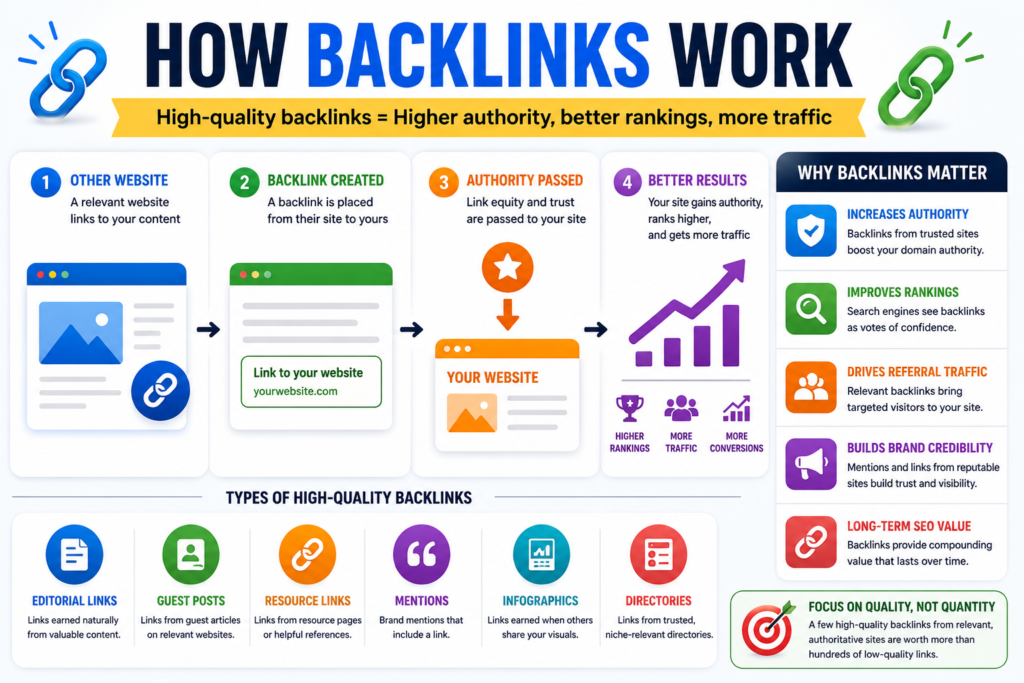
Not all backlinks are created equal. A single link from a respected industry publication or a .edu resource page can do more for your rankings than fifty links from low-quality directories or spammy blogs.
Search engines evaluate the authority of the linking site — its trustworthiness, relevance, and overall reputation — and pass a portion of that credibility to your site. This is why chasing volume alone is a losing strategy. Instead, focus on earning links from sites that are:
- Relevant to your industry or niche
- Established with real traffic and editorial standards
- Trusted enough that search engines weigh their links heavily
Keep this principle in mind throughout every tactic below: one great link beats ten mediocre ones.
1. Become a Source for Journalists (HARO and Similar Platforms)

Journalists and bloggers are constantly looking for expert quotes to back up their stories — and many of them are willing to link to your business in exchange for a useful, well-written quote.
Platforms that connect sources with reporters let you respond to relevant queries in your industry. If a journalist uses your quote, you typically get a backlink from their publication, which is often a high authority news or industry site.
How to make this work:
- Respond quickly; reporters work on tight deadlines
- Keep your answers specific and quotable, not generic
- Include your credentials and a one-line bio so it’s easy for them to attribute you correctly
2. Write Guest Posts for Reputable Industry Blogs
Guest posting has been around for years, and while low-quality guest blogging networks have been devalued by search engines, genuine guest contributions to respected sites in your niche are still one of the most reliable ways to earn strong backlinks.
The key is targeting sites that already have an engaged audience and editorial standards — not sites that will publish anything for a link.
How to find opportunities:
- Search for “[your industry] + write for us” or “[your industry] + guest post guidelines”
- Look at where your competitors have published guest content
- Pitch a specific, useful angle rather than a generic “can I write for you?” email
3. Get Listed in Niche-Specific and Local Business Directories
Not all directories are spammy. High quality, niche specific directories (think industry associations, local chambers of commerce, or sector-specific listing sites) can provide solid, relevant free backlinks — and they’re often free for basic listings.
For small businesses with a local presence, this is especially valuable because it combines backlink value with local SEO benefits.
Where to look:
- Local chamber of commerce and business association websites
- Industry-specific directories relevant to your field
- Trusted general directories with strong domain authority
Avoid directories that accept every submission with no review process — these tend to carry little to no SEO value and can occasionally do more harm than good.
4. Use the Broken Link Building Method
This tactic involves finding broken (dead) links on other websites and suggesting your own content as a replacement. It’s a win-win: the site owner fixes a broken link, and you earn a backlink.
The process:
- Find resource pages or articles in your niche with outbound links
- Use a free browser extension to check for broken (404) links on those pages
- Create or identify a piece of content on your site that could replace the broken resource
- Reach out to the site owner, point out the broken link, and suggest your content as a fix
This approach works well because you’re providing genuine value to the site owner, not just asking for a favor.
5. Create Linkable Assets Worth Referencing
Sometimes the most effective backlink strategy isn’t outreach at all — it’s creating something so useful that other sites want to link to it naturally.
Linkable assets typically include:
- Original research, surveys, or data studies relevant to your industry
- In-depth, well-organized guides on topics your audience searches for
- Free tools, templates, or calculators
- Visually compelling infographics that summarize useful data
Once you’ve created something genuinely valuable, share it with relevant bloggers, journalists, and industry sites who cover that topic — they’re far more likely to link to a resource than to a generic sales page.
6. Build Genuine Partnerships and Co-Marketing Opportunities
Look at your existing network — suppliers, partners, complementary (non-competing) businesses, and even satisfied customers. Many of these relationships can naturally lead to backlinks through:
- Co-authored content or joint webinars
- Supplier or partner pages that list and link to businesses they work with
- Testimonials you provide to vendors, who often link back to your site
- Sponsorships of local events or nonprofits that list sponsors with links
These links tend to be highly relevant and easy to earn because the relationship already exists — you’re simply formalizing it into a link.
A Word of Caution: Avoid Shortcuts That Can Hurt You
It’s tempting to look for fast, free backlinks through link farms, automated link exchanges, or comment spam. Resist this. Search engines have become very good at identifying manipulative link schemes, and the penalty — a drop in rankings or a manual action — can undo months of legitimate work.
Stick to tactics that involve real relationships, real value, and real relevance. Slower, sustainable link building will always outperform shortcuts in the long run.
Track What You’re Earning
As you start building links, keep a simple log of where they’re coming from, the authority of the linking site, and the anchor text used. Free tools are available to monitor new and lost backlinks so you can spot opportunities — and catch problems — early.
Final Thoughts
Building high authority backlinks without a budget takes more time than simply paying for links, but the results are more durable and far less risky. By focusing on relationships, relevance, and genuinely useful content, small businesses can compete for search visibility without competing on ad spend.
Start with one or two tactics from this list — HARO outreach and a single piece of linkable content are a great place to begin — and build from there.
Ready to put this into action? Pick your first linkable asset idea this week and start reaching out to three relevant sites in your niche. Momentum builds quickly once you land your first high authority backlinks.